
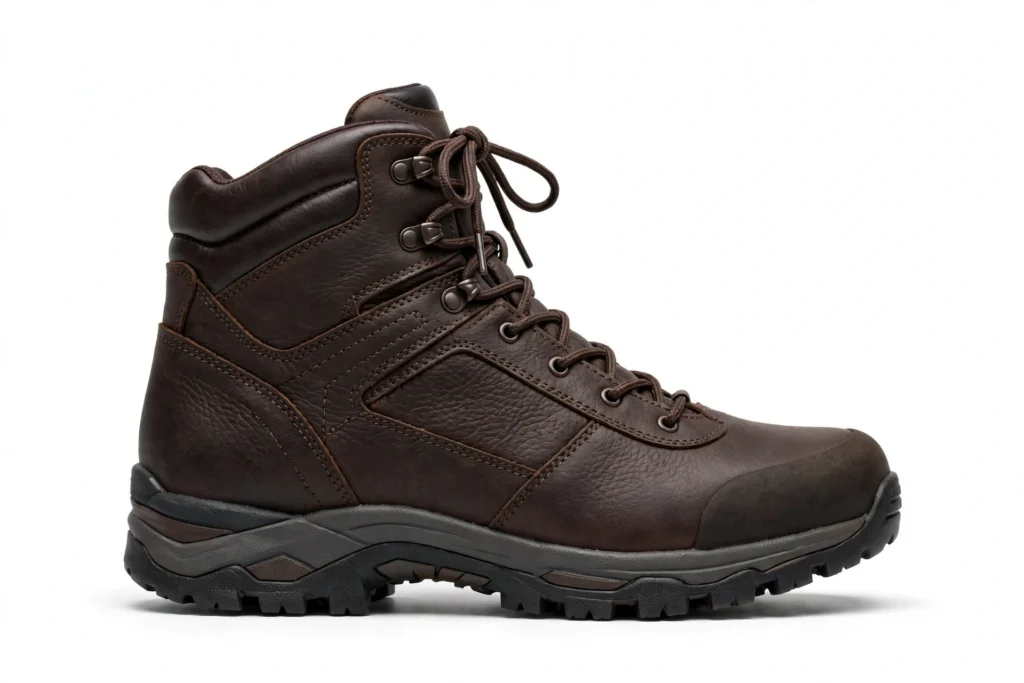
Good hiking boots protect your feet, ankles and knees over uneven ground, so choosing the right pair matters more than picking the most rugged-looking one. Start by thinking about the walks you actually do: short day hikes on smooth paths need far less boot than steep, rocky routes with a heavy pack.
Fit Comes First
Try boots on in the afternoon, when your feet are slightly swollen, and wear the socks you plan to hike in. Your toes should have room to move without touching the front on a downhill slope, and your heel should stay put with little or no lift. Walk around the shop, including up and down any ramp, and take your time — a boot that pinches in the shop will only feel worse on the trail.
What to Look For
Consider the boot’s weight, the stiffness of its sole and how much ankle support it offers. Lighter, more flexible boots suit gentle trails, while stiffer soles and higher cuffs help on rough, uneven ground. Think about waterproofing too: a waterproof lining helps in wet weather but can feel warmer in summer. Finally, check that the lacing holds your foot securely and that the tread grips well on loose surfaces before you buy.